If a contractor read only three lines of your pre-construction information, which three…
If a contractor read only three lines of your pre-construction information, which three would keep someone alive?
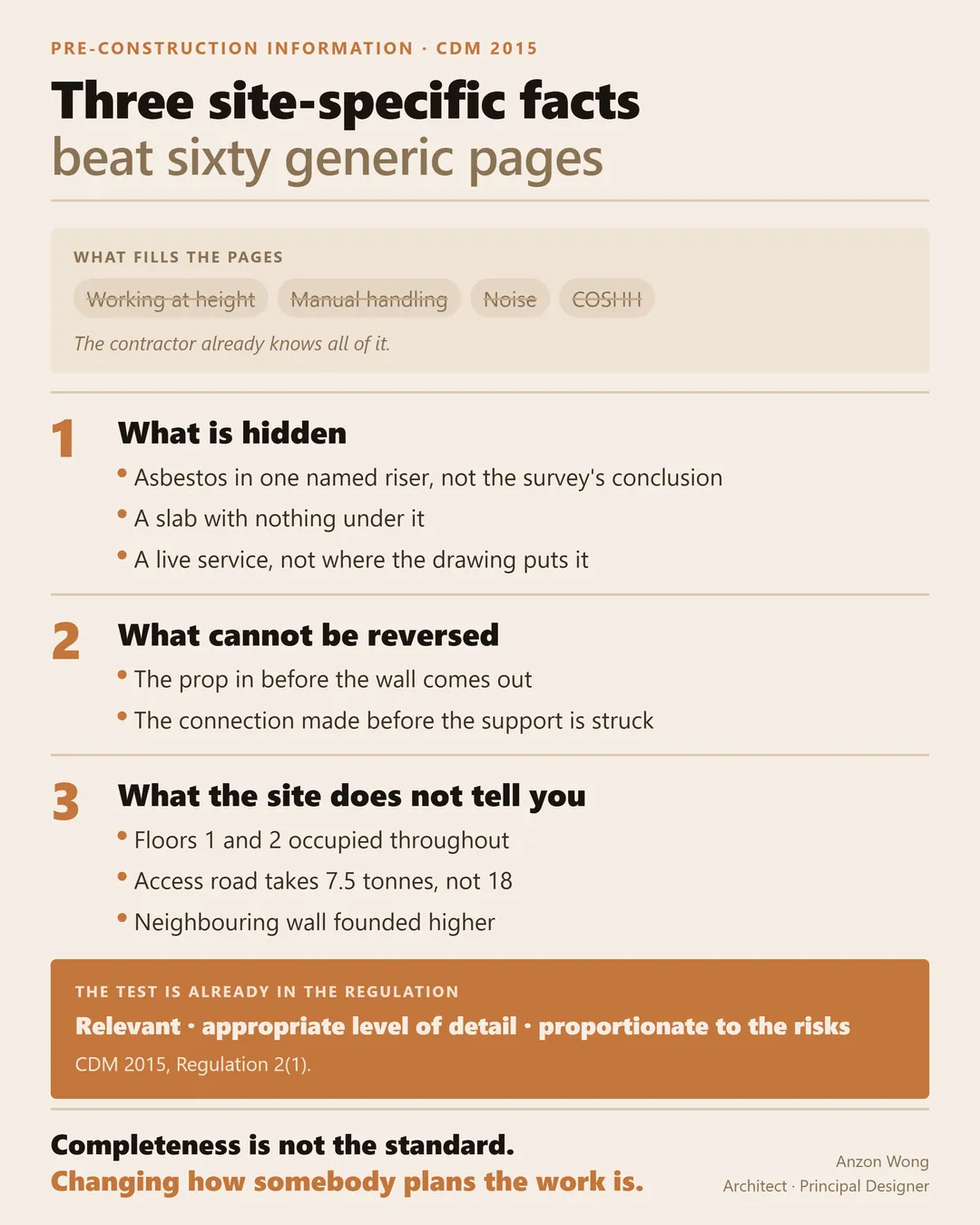
Most packs run to sixty pages, and most of those pages are a generic hazard list. Working at height. Manual handling. Noise. A contractor already knows all of it. Nothing on that list changes a single decision about how the work gets planned.
The few lines that do change decisions are the ones only the design team and the client can supply.
I look for three kinds of fact.
What is hidden. The asbestos in one named riser, not the survey's conclusion. The slab with nothing under it. The service that is still live and does not run where the drawing says it runs.
What cannot be reversed. The sequence with one safe order: the prop that goes in before the wall comes out, the connection made before the temporary support is struck.
What the site does not tell you. Floors 1 and 2 stay occupied throughout. The access road takes 7.5 tonnes, not 18. The neighbouring wall is founded higher than the new foundations.
The service that is still live and does not run where the drawing says it runs.
CDM 2015 never asked for a complete document. The definition in Regulation 2 sets the test: information relevant to the work, at an appropriate level of detail, and proportionate to the risks. Regulation 4(4) then puts a duty on the client to get it to every designer and contractor. Completeness is not the standard. Whether it changes how somebody plans the work is the standard.
So the order matters more than the length. Site-specific facts on page one, each written as a fact rather than a warning. Generic content moves behind them into an appendix, still there when it is needed, no longer hiding the part that matters.
The aim is not a shorter document. It is a document that still has a reader at the bottom of page one, and that reader is the person who has to build the thing.
Three lines. Which three would yours be?
More in Building regs
All →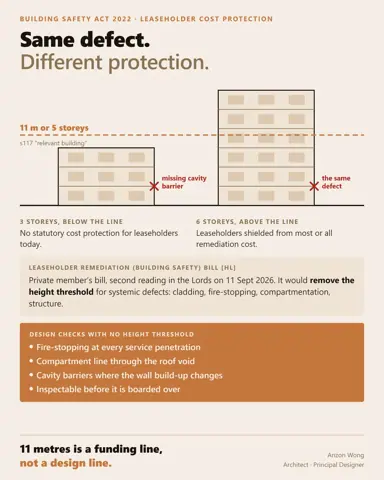 A cavity barrier missing from a three-storey block fails exactly as one missing from a…
- Building regsFrom Wednesday 30 September, whether a new block of flats needs a second stair depends on…25 Sep 2026From Wednesday 30 September, whether a new block of flats needs a second stair depends on…
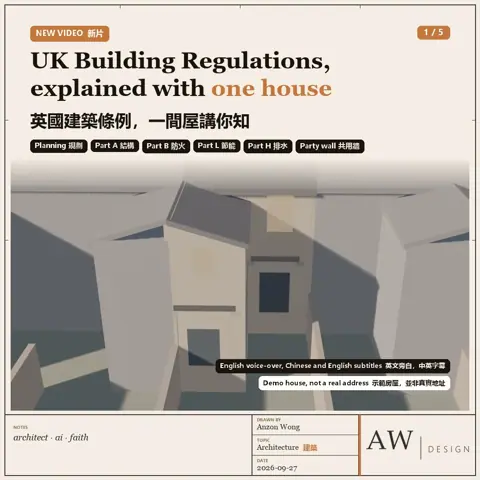 How different is extending a house in the UK from Hong Kong?
- Building regsThe most useful risk note I have seen on a recent project was one line on a section…28 Sep 2026The most useful risk note I have seen on a recent project was one line on a section…