"When preparing or modifying a design." Two words in CDM 2015 regulation 9 are easy to…
"When preparing or modifying a design." Two words in CDM 2015 regulation 9 are easy to read past: "or modifying".
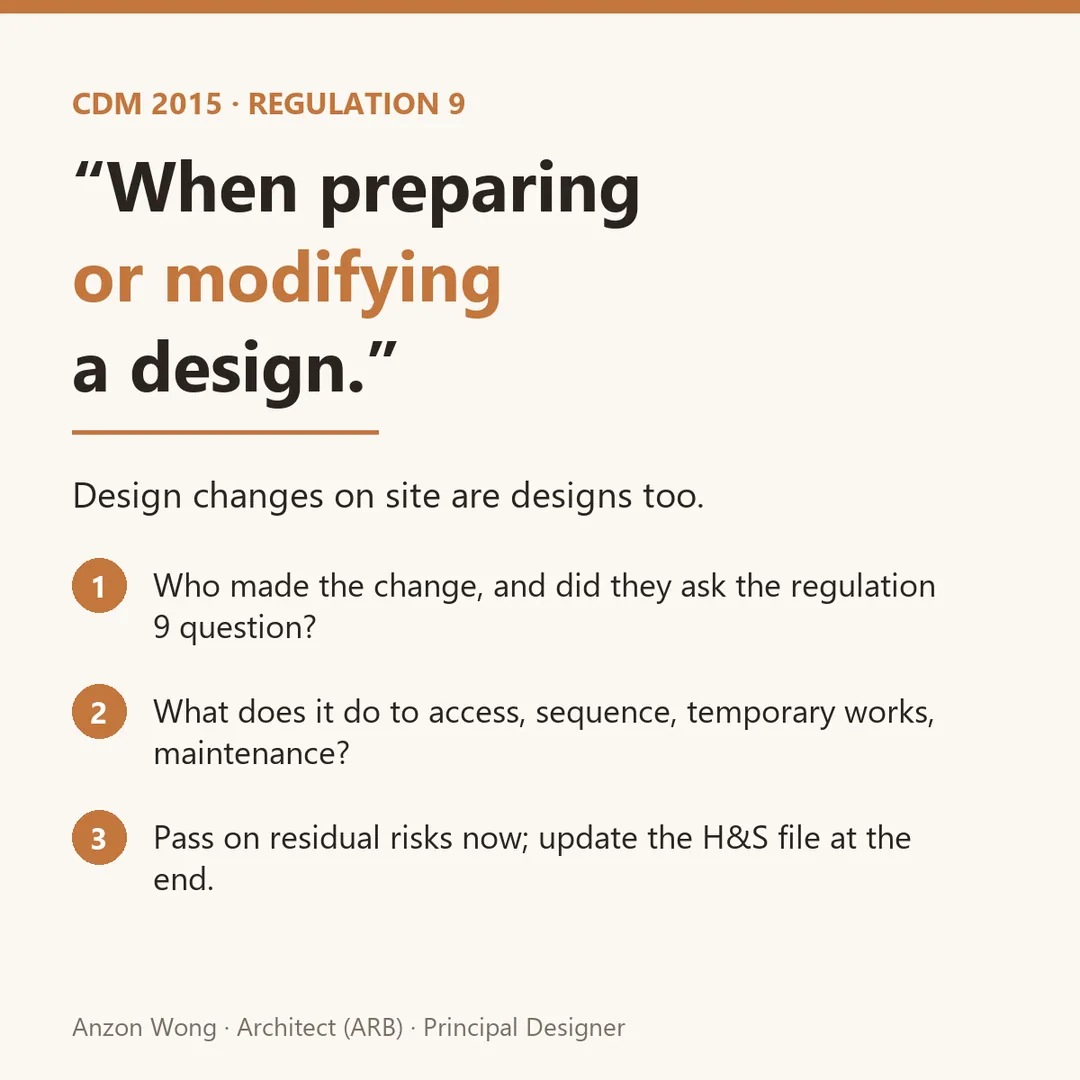
Most design risk work happens before start on site, while the drawings are being prepared. But a lot of design changes after that: a product substitution, a value engineering saving, a contractor-designed element, an RFI answered with a sketch. Each of those is a design, and whoever makes the change is a designer under CDM 2015, whether or not they call themselves one.
The question regulation 9 asks does not stop when the site opens. Can this change eliminate a foreseeable risk to the people who will build it, maintain or clean it, or use it as a workplace? If not, can the risk be reduced or controlled, and has the information been passed on?
The question regulation 9 asks does not stop when the site opens.
Three checks that cost very little:
1. Treat every design change as a design: who made it, and did they ask the regulation 9 question?
2. Ask what the change does to the original risk thinking: access, sequence, temporary works, maintenance.
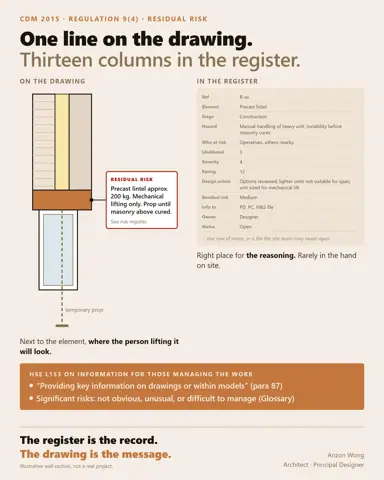
3. Update the information that goes with it: residual risks for the contractor now, and the health and safety file at the end.
The riskiest drawing on a project is often the one revised after start on site, because the risk question was answered once, months earlier, for a different design.
How does your team review design changes during construction?