Two thousand driverless taxis are heading for European streets
Two thousand driverless taxis are heading for European streets. The brain inside them was written in Guangzhou.
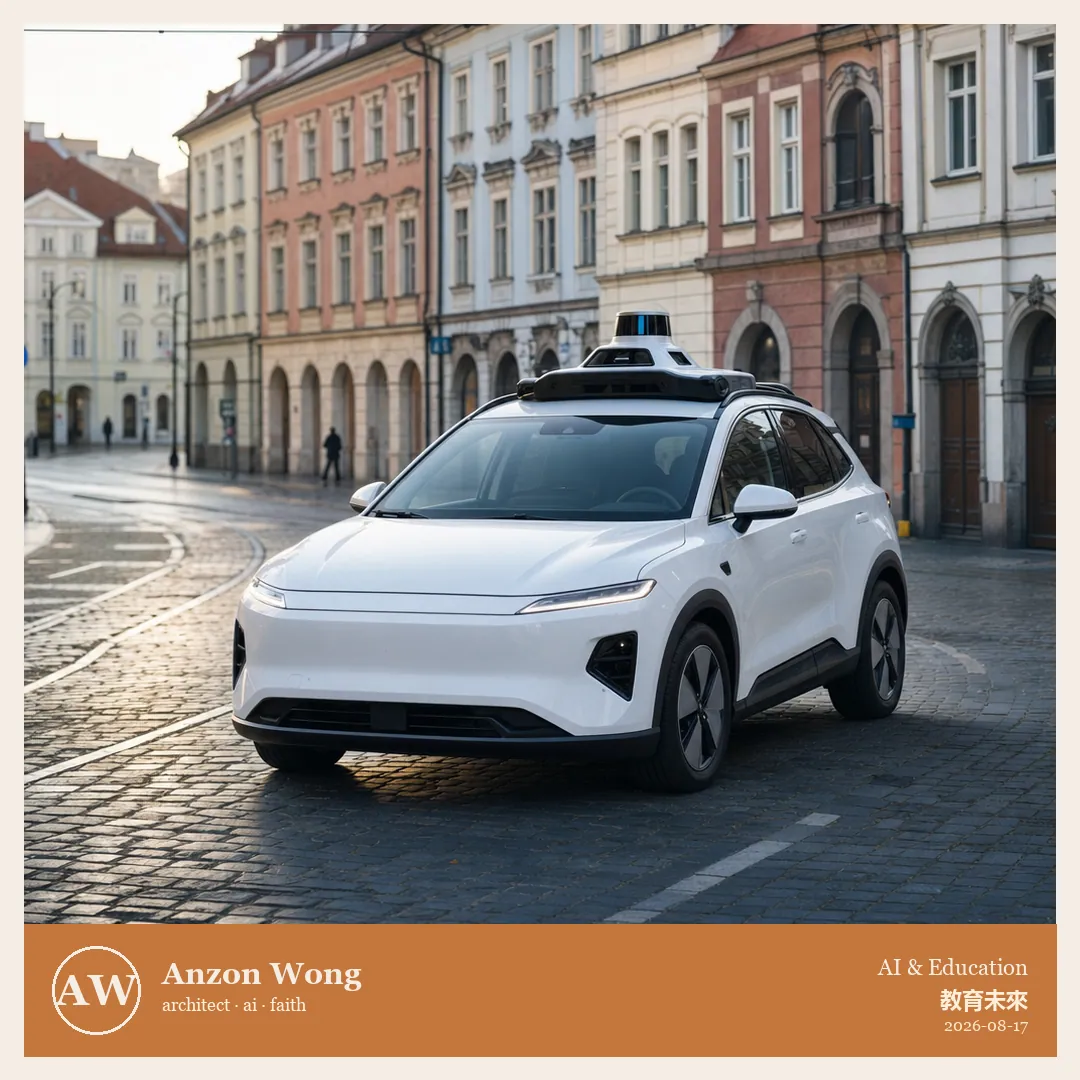
On 13 August, Pony.ai announced an expanded partnership with Uber to deploy more than 2,000 robotaxis across five European cities. Pony.ai is headquartered in Guangzhou.
📌 Where this actually stands
The four additional cities haven't been named. No timetable has been given. The only service genuinely carrying passengers is in Zagreb, and that one only launched this year. So what exists today is an announcement of intent, not two thousand cars on the road.
I'm writing about it anyway, because even if you discount the number, even if it runs two years late, the structure it exposes is already clear.
🧩 One job, split three ways
Driving a taxi used to be a single job, one person, start to finish. Behind these 2,000 cars sit three parties:
- The autonomy software, Guangzhou
- The platform that takes the booking, dispatches the car and handles payment, the US
- The fleet itself: who buys the cars, cleans them, charges them, repairs them, a local company (in Zagreb, the Croatian firm Verne)
No single party owns the whole thing. And of the three layers, the most valuable one employs the fewest people.
All three layers have work in them, but their bargaining power is nothing alike. The cleaning-and-charging layer is local, tangible, real work, and also the most replaceable: chosen this year, swapped for the firm next door the year after. The layer that writes the brain can sit on the other side of the planet, write it once, and sell it into five cities.
All three layers have work in them, but their bargaining power is nothing alike.
🎓 So the question isn't "which jobs disappear"
We keep telling children to pick a job AI can't replace. But this story isn't about a job disappearing. It's about a job being taken apart, and which layer you end up standing on.
No careers guidance covers that distinction. School still asks what do you want to be, while the real question has quietly become: once this industry is pulled apart, am I in the layer that sets the rules, or the layer that follows them?
And there's something I have to admit about myself. When I was young, the default answer to "where does advanced technology come from" was America. I've been carrying that map around without noticing, and quite possibly handing it to my children.
This isn't a point about which country is ahead. It's that an out-of-date map doesn't just make you back the wrong company. It makes you look in the wrong direction entirely, and if you're looking the wrong way, you'll also misjudge which skills are about to be worth something.
If your child is twenty-five and their whole industry is carved up like this, which layer would you want them standing on? Or is teaching them to see that there are three layers the more useful thing?
https://techcrunch.com/2026/08/14/uber-and-pony-ai-plan-to-bring-2000-robotaxis-to-europe/