A new memory device runs on less than 0.1 volts. The socket in your wall is 230
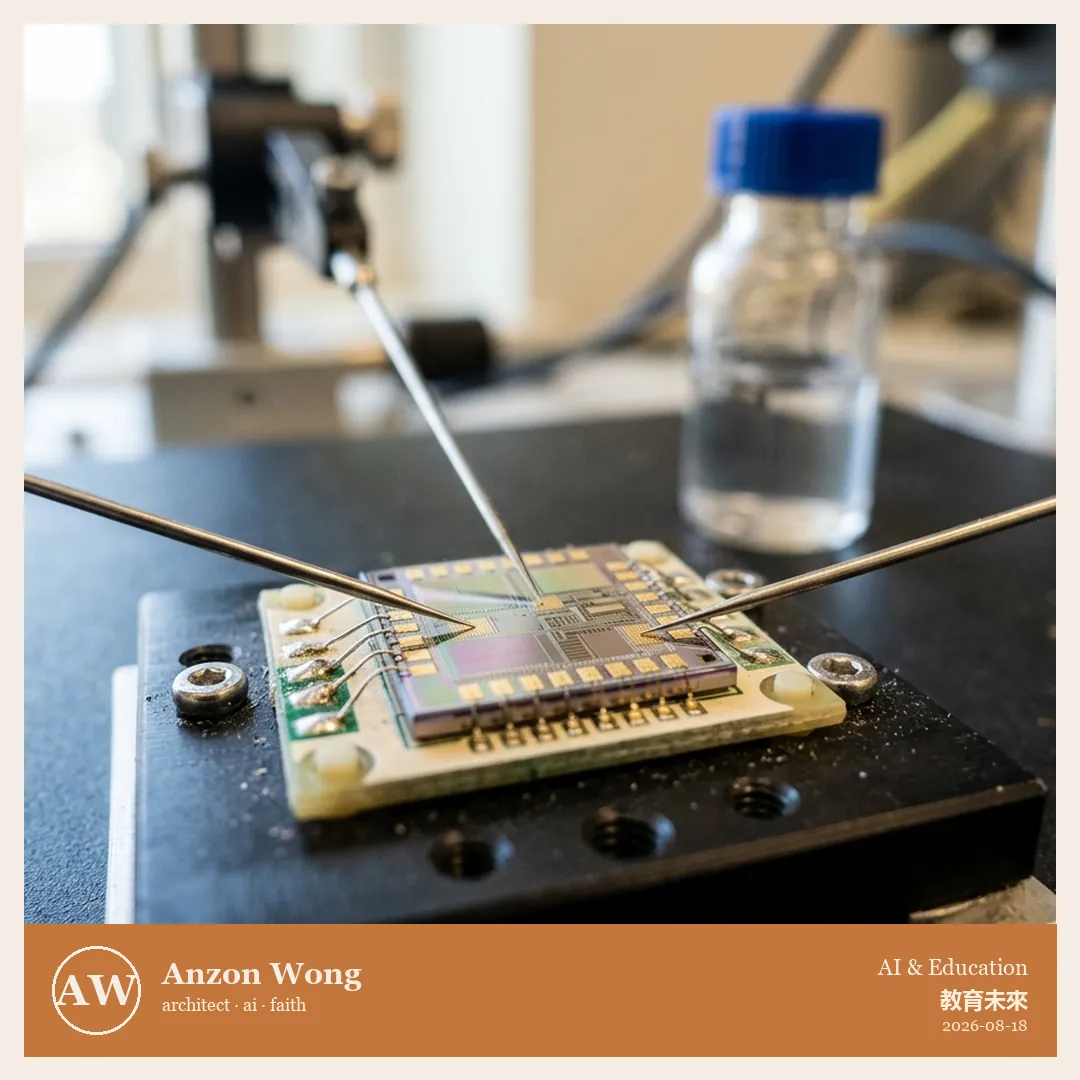
On 17 August, Penn State published a memristor in Advanced Functional Materials: synthetic DNA, doped with silver nanoparticles, bonded to a perovskite semiconductor. A hundred times less power than conventional storage, still working at around 120°C. Patent pending.
⚠️ Now the unflattering half.
The retention they confirmed at room temperature is "over six weeks". The flash chip in your phone is rated in years. This is a laboratory prototype, no product, no date, no price. The gap is not a small one.
So why write about it?
Because what it moves isn't capacity. It's electricity. The expensive part of AI today isn't the arithmetic, it's the commute: data walks from memory to processor, gets computed, walks back. Every round trip burns power, and a great deal of what a data centre draws is spent on that walk.
A memristor's whole idea is to skip the commute, remembering and computing happen in the same place. And the material they reached for was DNA. Nature has been storing data for three and a half billion years, at a density nobody has beaten yet.
Every round trip burns power, and a great deal of what a data centre draws is spent on that walk.
The part I keep re-reading is the author list.
Molecular biologists. Perovskite people, who came out of solar cells. Circuit engineers. Two universities. This did not come out of a computer science department, it took four or five fields colliding.
Meanwhile we still tell children: specialise early, go deep, don't wander. Arts or sciences, pick a side. Three A-Levels at sixteen, and the next decade points wherever they aimed.
I'm not arguing against choosing. I'm noticing that exams measure how deep you got inside one subject, while most of what has actually moved this decade happened in the gap between two of them. And no paper sets a question on the gap.
This DNA memory may never get past six weeks. But if it does, the breakthrough won't have come from a chip company.