Office AI tip: BIM clash detection, and which part an AI agent should do
The model is a fictional floor I built for this demo: one office level, three models (structure, ceiling, services), 127 elements. No real project data.
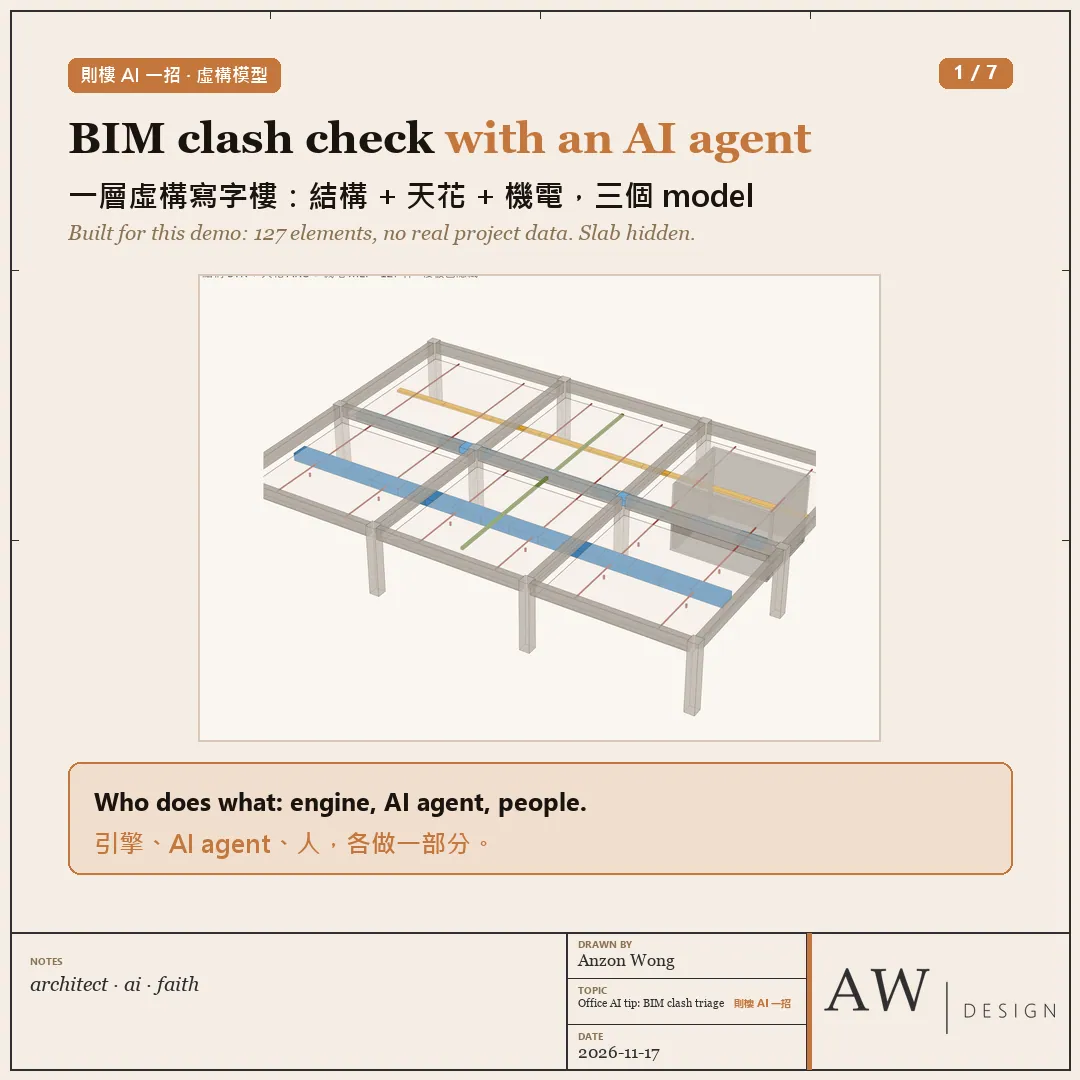
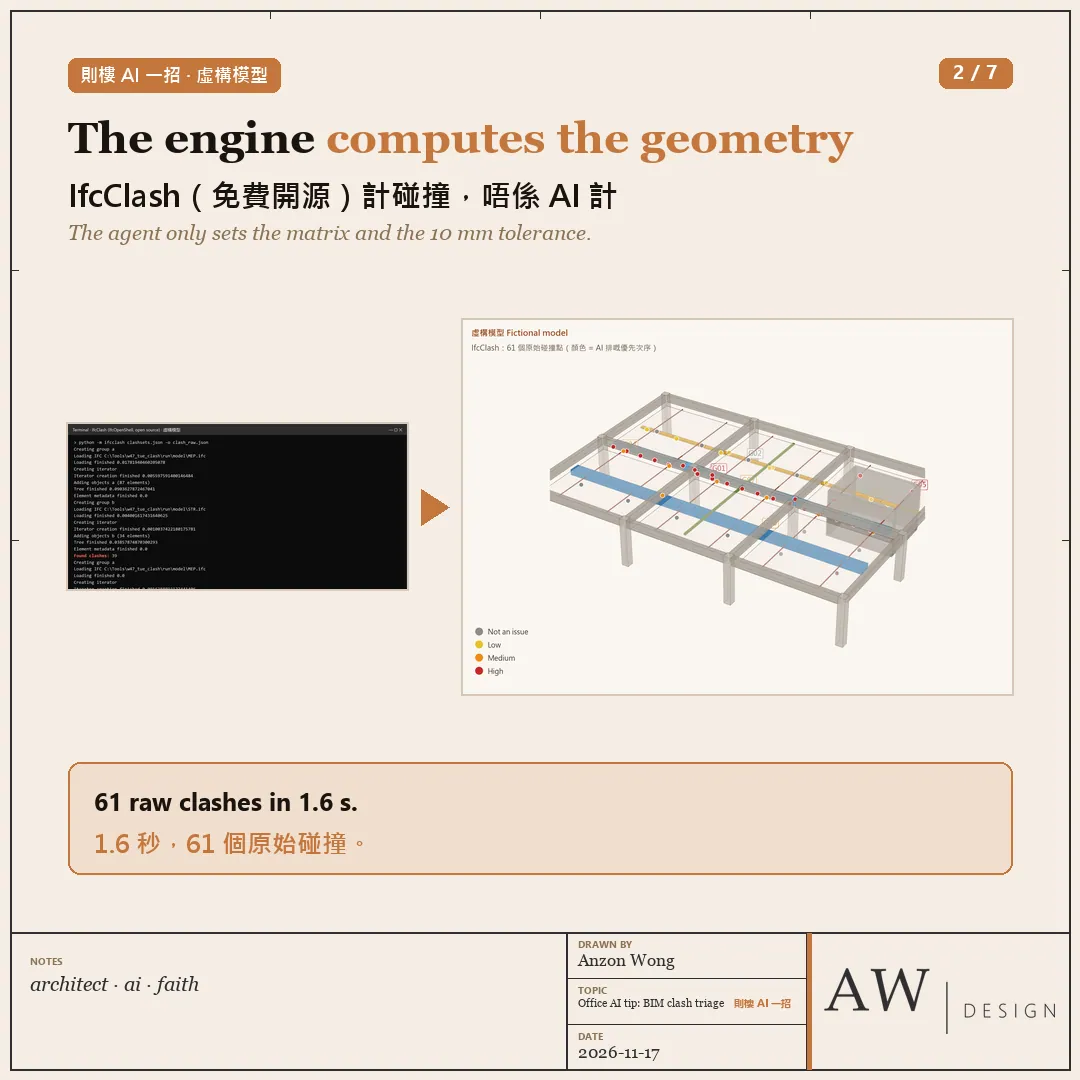
1️⃣ The clashes are not computed by AI: the free, open-source IfcClash (IfcOpenShell) computes the geometry. The agent only sets the rules: services against structure, services against ceiling, 10 mm tolerance
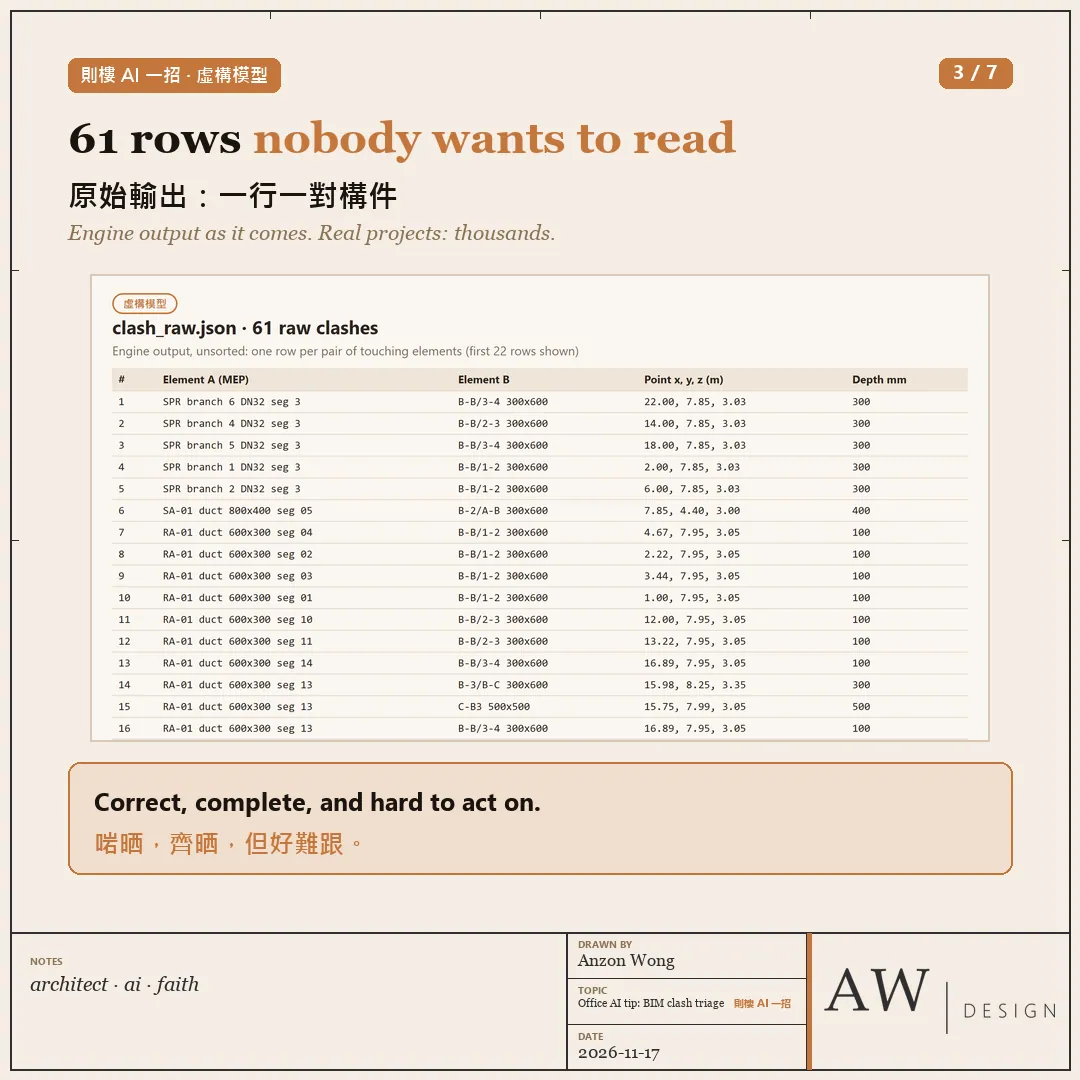
2️⃣ In under two seconds: 61 raw clashes, one row per pair of elements. Nobody wants to read them one by one
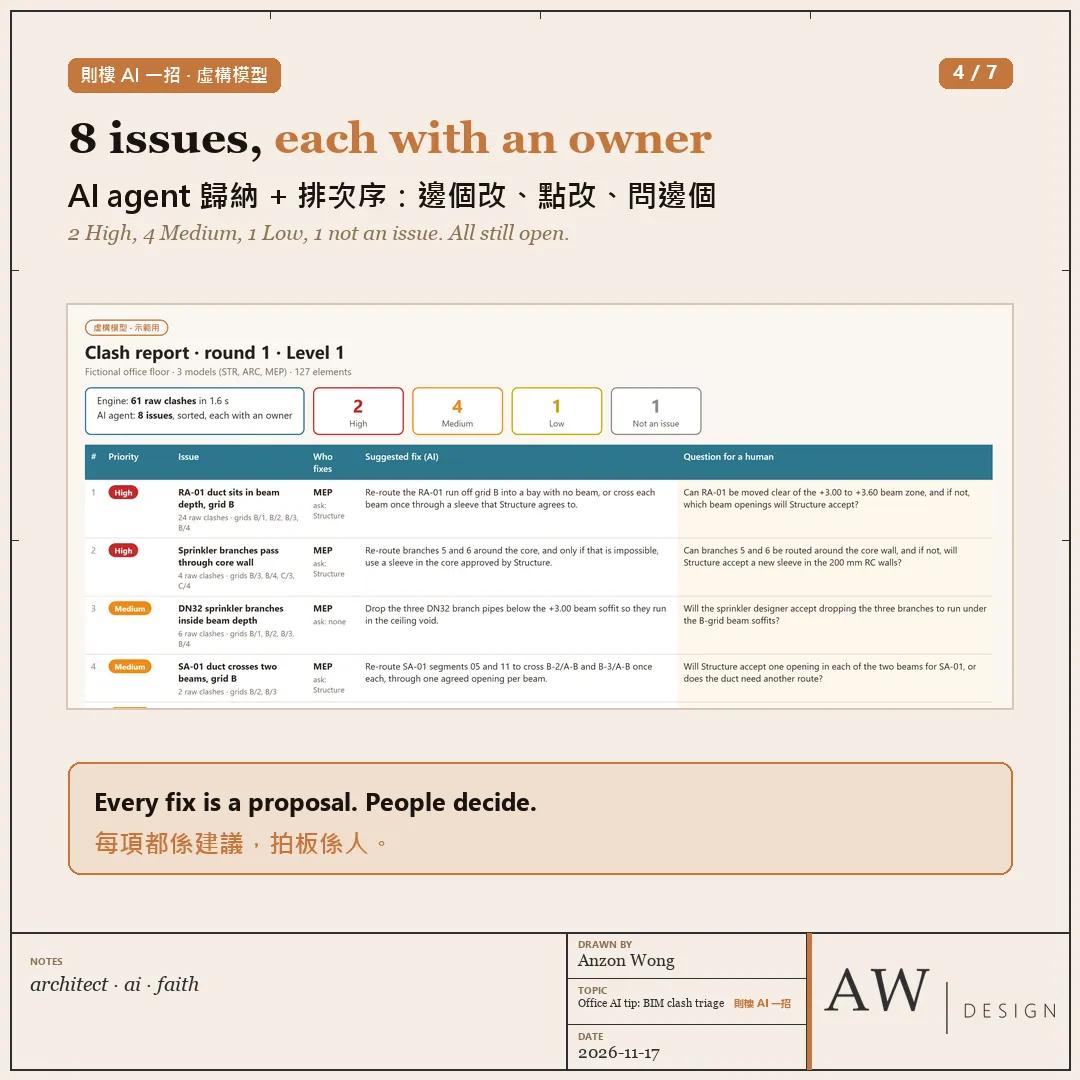
3️⃣ The agent sorts them into 8 issues, in priority order: 2 High, 4 Medium, 1 Low, 1 "not an issue", each with who changes what, how, and who has to agree
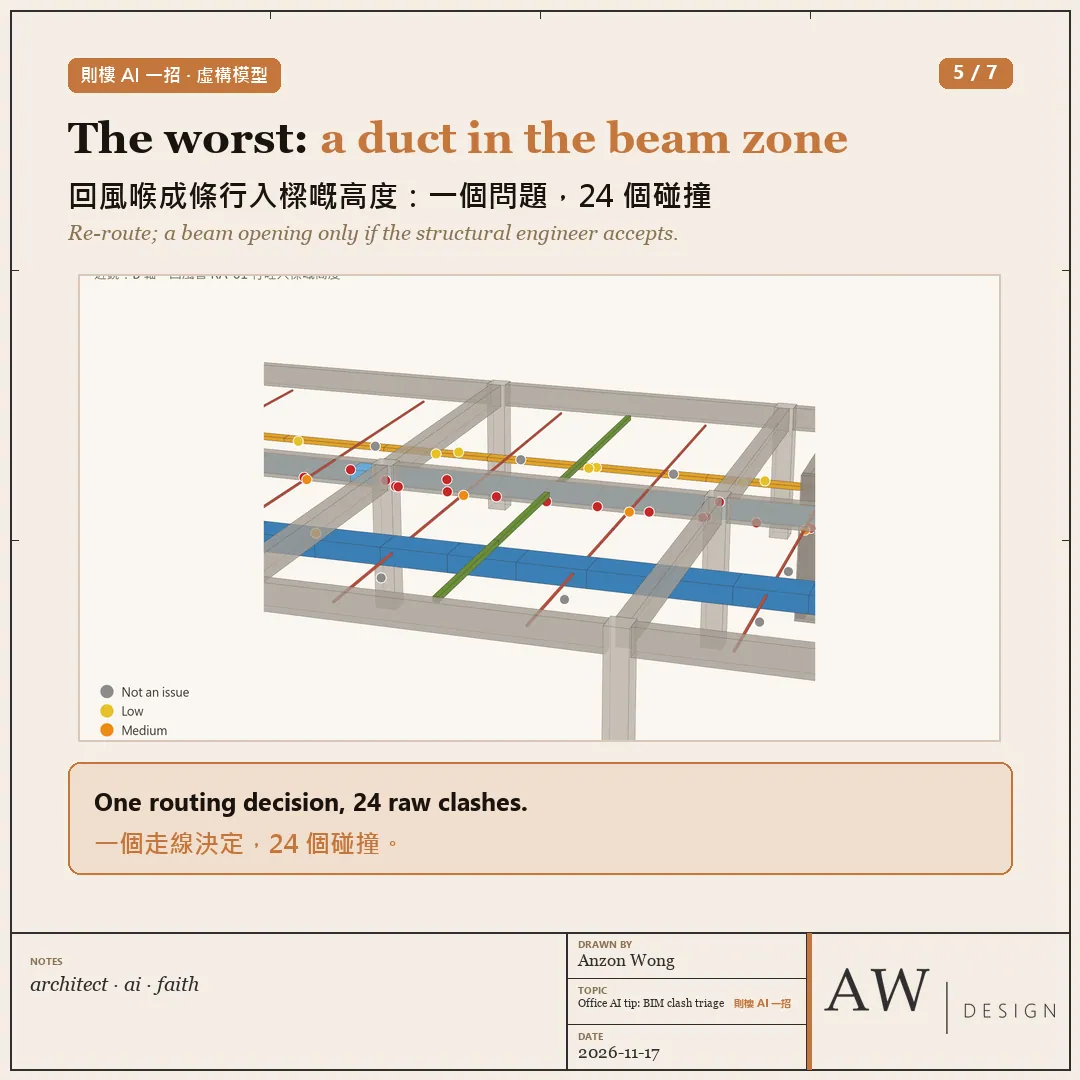
4️⃣ The worst: a return duct runs inside the beam depth all the way along one grid line. One issue, 24 clashes. It suggests a new route; a hole through a beam is the structural engineer's call
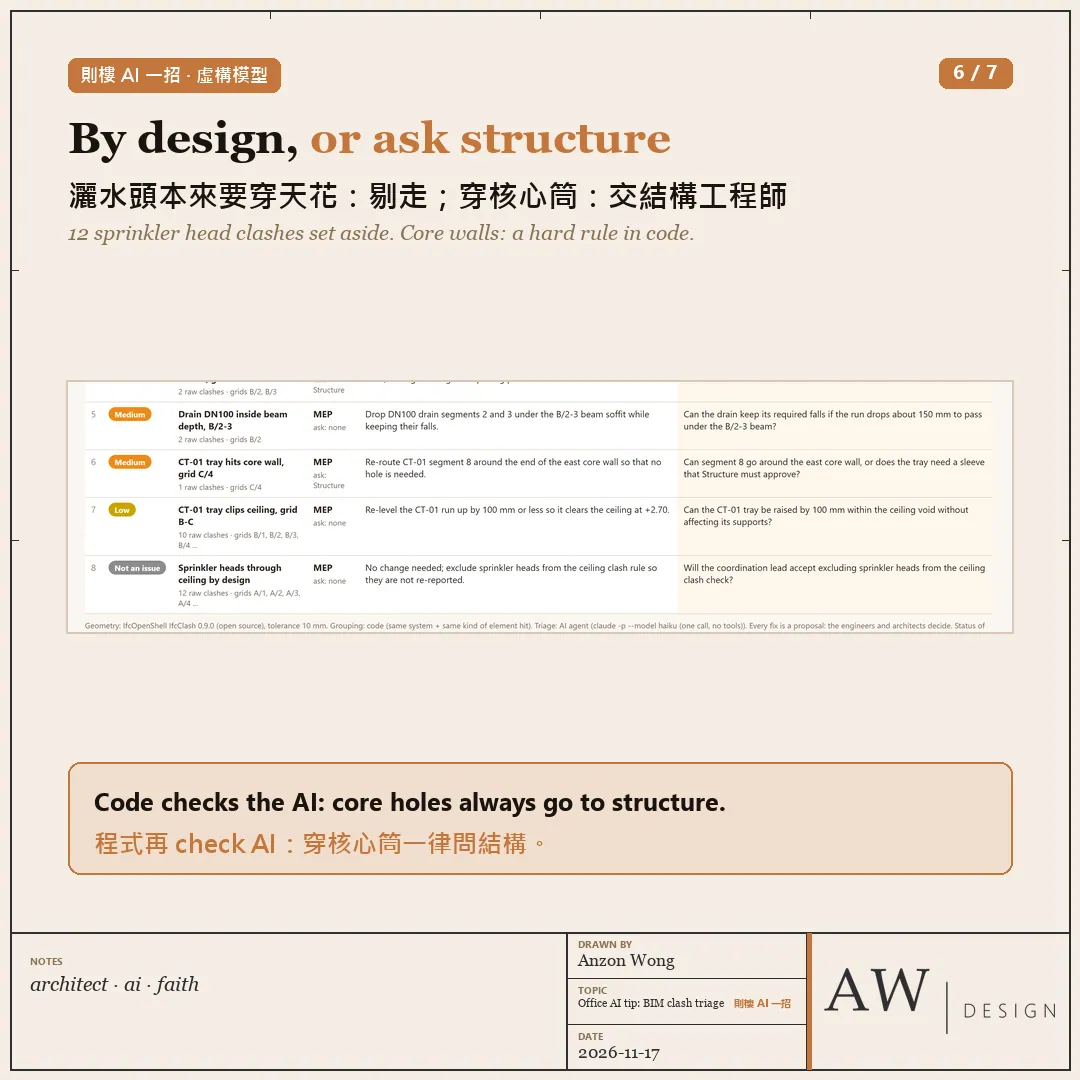
5️⃣ Sprinkler heads pass through the ceiling by design: 12 clashes set aside. Anything through the concrete core walls goes to the structural engineer
6️⃣ A real finding: a small local model I tried first called almost everything urgent. The model and the written rules matter
The engine does the geometry, AI sorts and writes the report, people decide.
The engine does the geometry, AI sorts and writes the report, people decide.
What is the most painful part of clash checks in your office? Tell me what you think in the comments.
Want to try? Comment "AI" and I'll send you the free first-lesson booking link 👇