He is 34, spent nine years as a software developer, and now spends his days reaching into…
He is 34, spent nine years as a software developer, and now spends his days reaching into tight spaces in engine bays, tightening parts by feel.
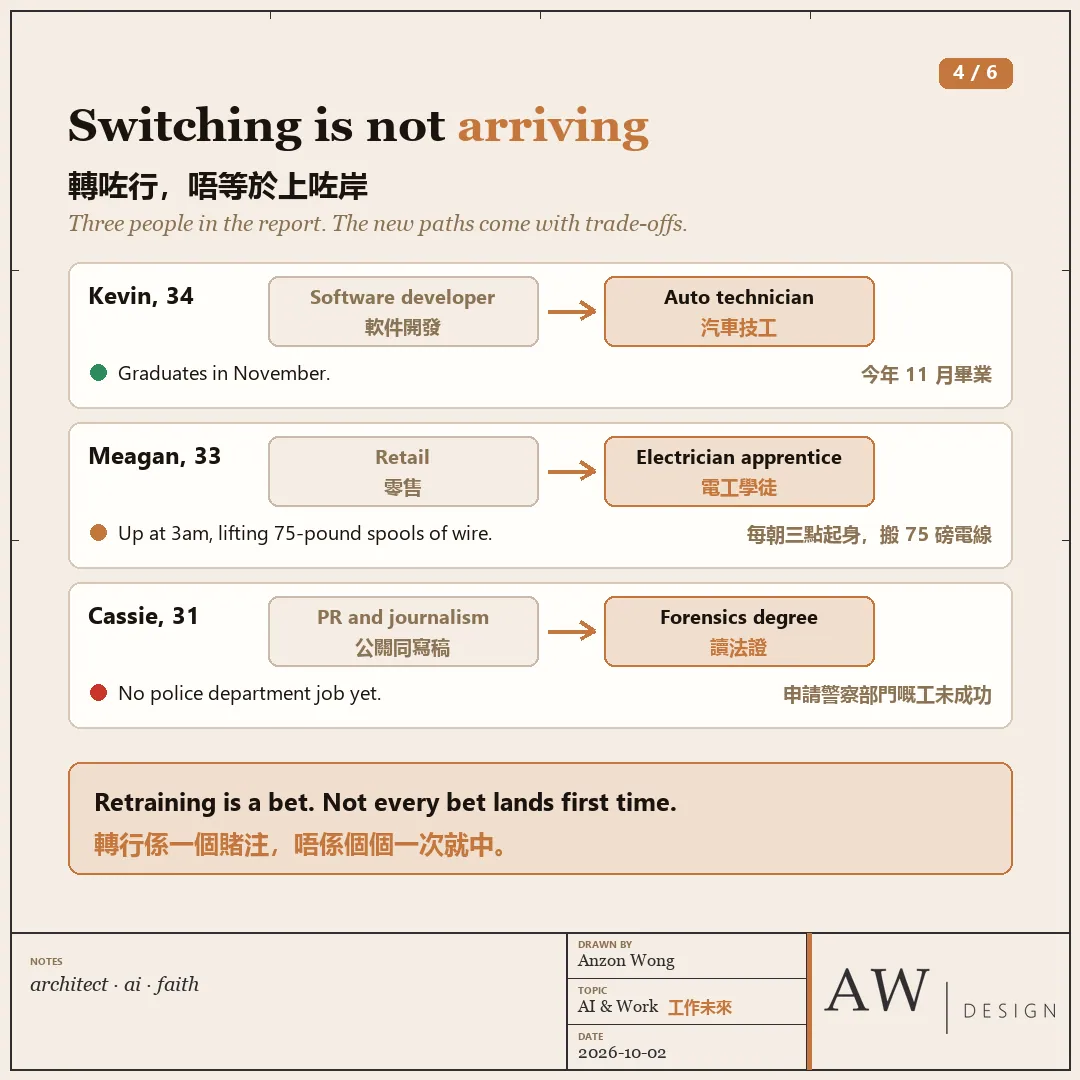
His name is Kevin Brough. He was laid off in May 2024 and is not sure whether AI had anything to do with it. But he watched AI get better and better at writing code, and in summer 2025 he enrolled on an automotive technology programme at a technical college in Pittsburgh. He graduates this November. "I never thought I'd be changing from software development, but here I am."
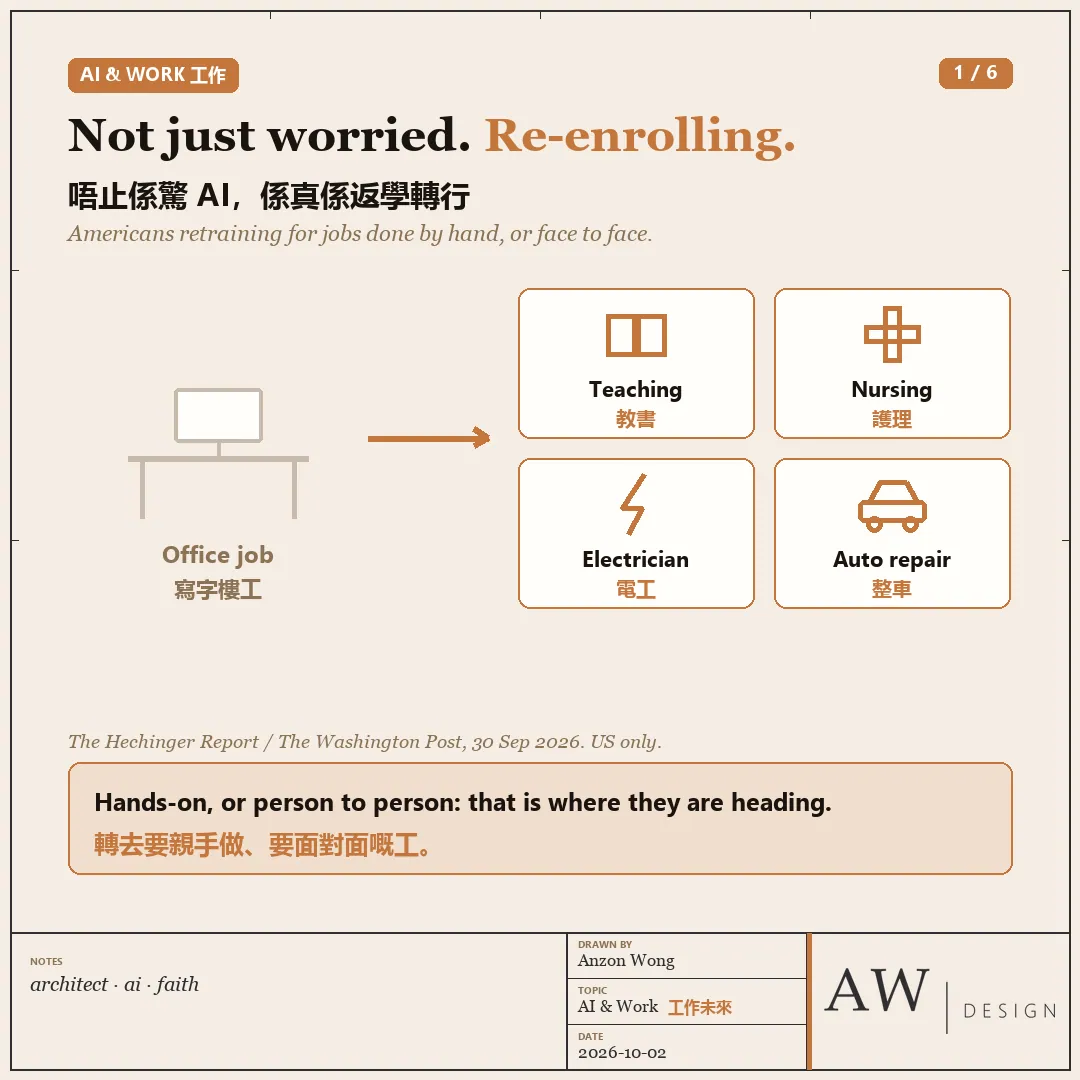
His story is in a Hechinger Report piece from 30 September, also published by The Washington Post. It is about Americans who have moved past worrying about AI and are going back to school, retraining for teaching, nursing, electrical work and car repair: jobs done with your hands, or face to face.
The figures the report cites (all US):
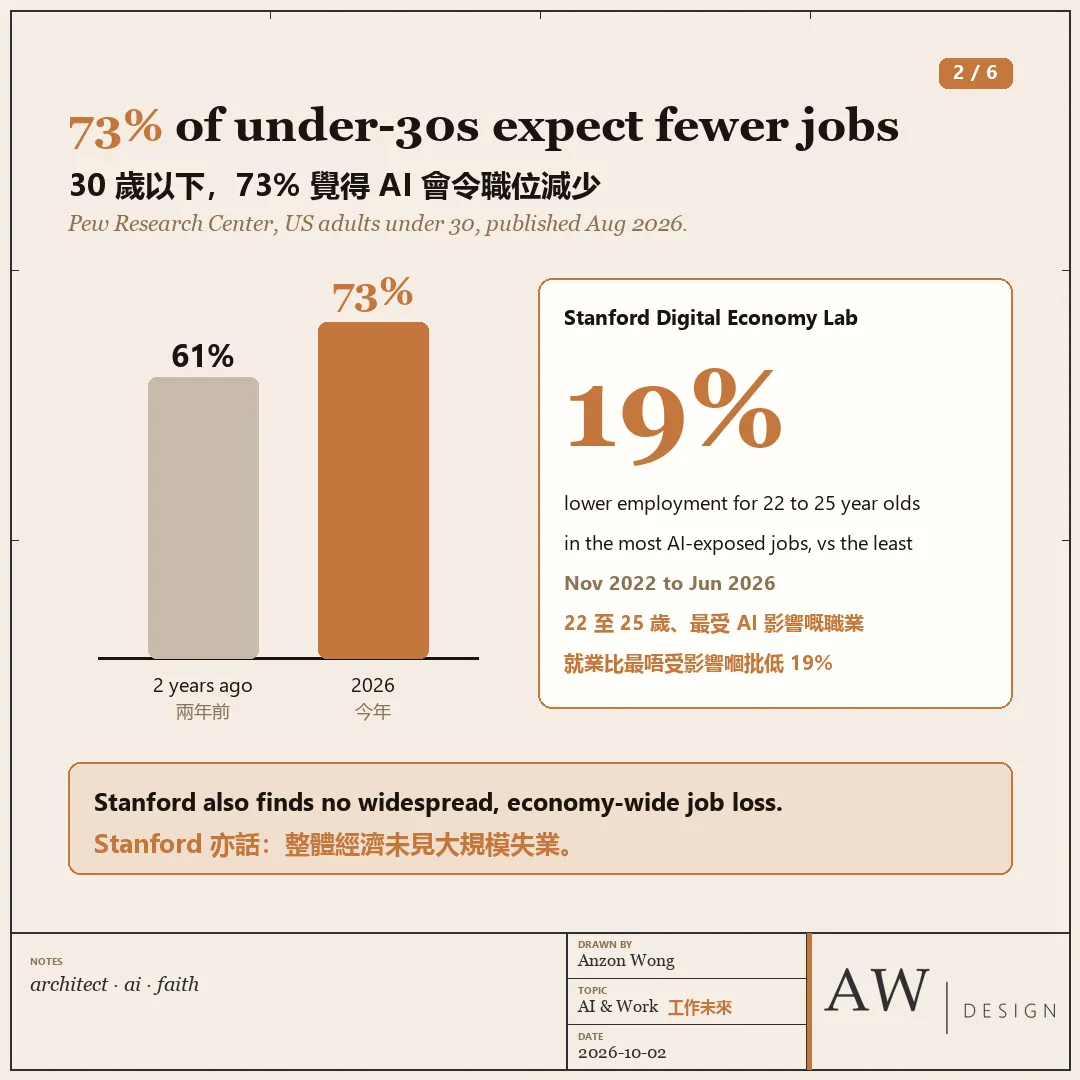
・Pew, August: 73% of adults under 30 say AI will lead to fewer jobs, up from 61% two years ago.
・Stanford Digital Economy Lab: from November 2022 to June 2026, employment of 22 to 25 year olds in the most AI-exposed jobs fell 19% relative to those in the least exposed.
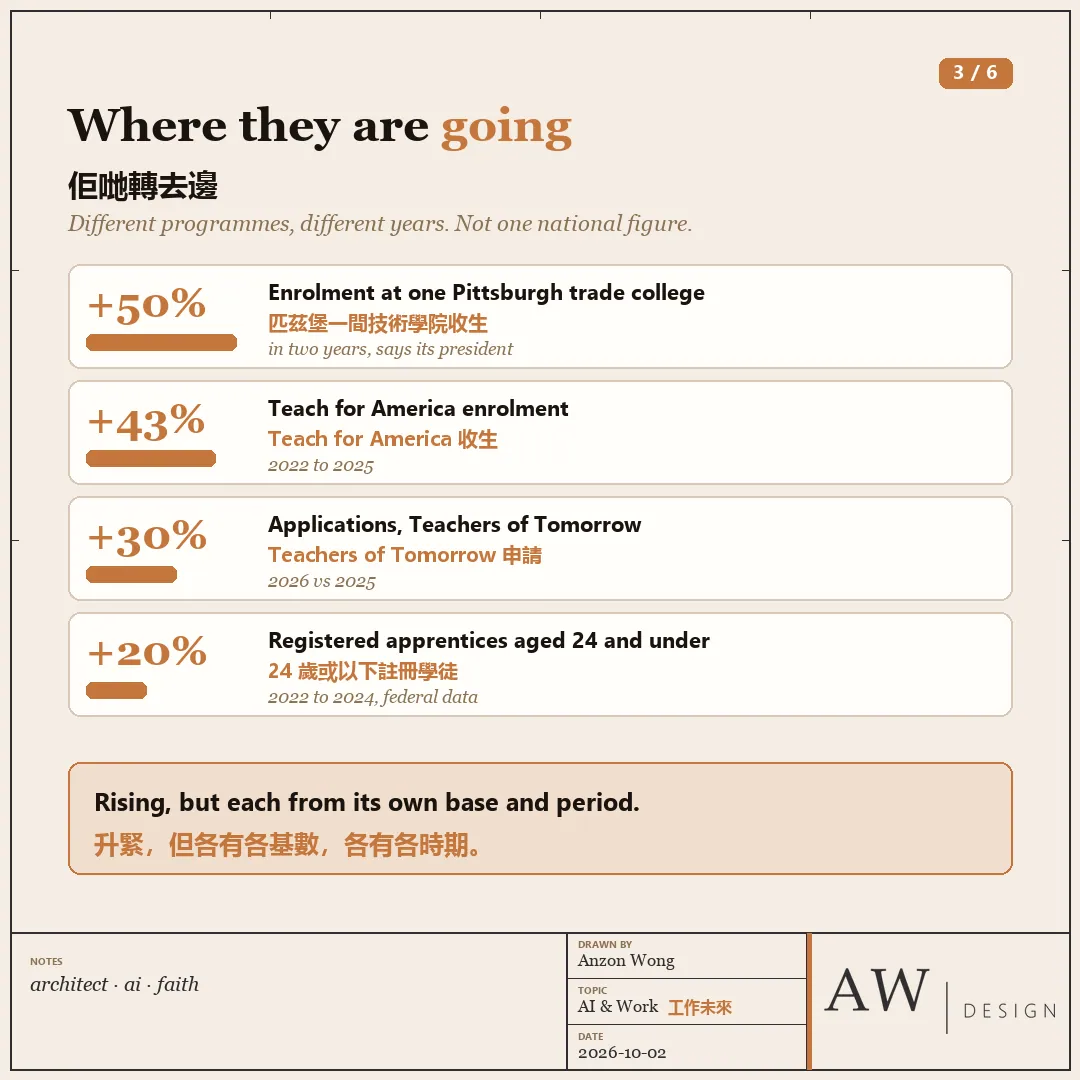
・Teach for America enrolment rose 43% from 2022 to 2025. Registered apprentices aged 24 and under rose 20% from 2022 to 2024.
The report does not only tell the good half. Meagan, 33, moved from retail to an electrician apprenticeship. She gets up at 3am and lifts 75-pound spools of wire. Cassie, 31, went back to study forensics and has not yet landed a police department job. Changing careers is not the same as arriving.
Cassie, 31, went back to study forensics and has not yet landed a police department job.
So which jobs still need a human in the room?
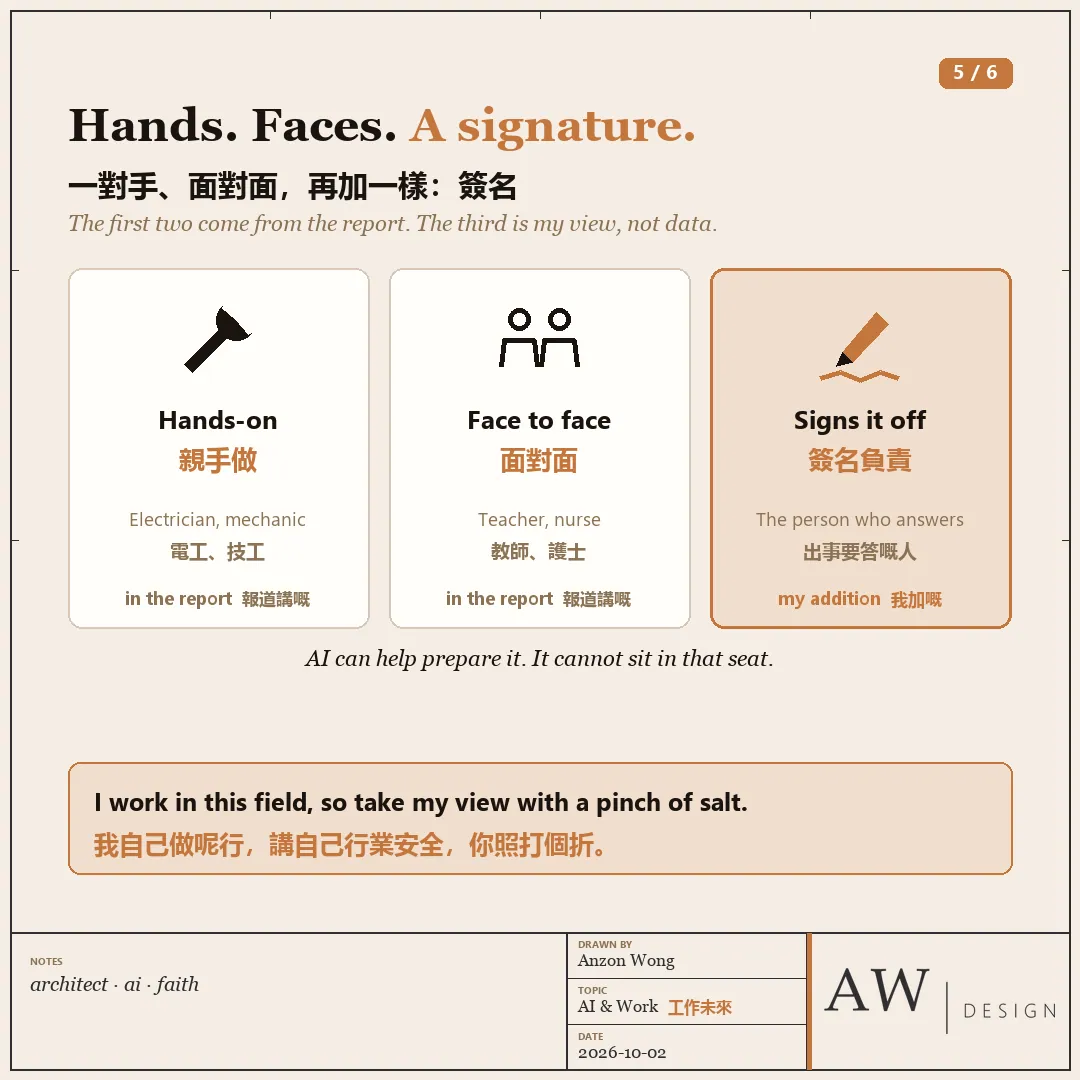
The report names two things: hands, and being face to face. I would add a third: a signature.
I am an architect and I use AI agents every day, for drawings and research, and they already help a great deal. But from design to completion, the rules require named people to be responsible for a building, and someone has to answer when something goes wrong. AI can help prepare for that. It cannot sit in that seat. So I would put the person who signs off on that list. I work in this field, of course, so take my view of my own industry with a pinch of salt.
The caveats, plainly:
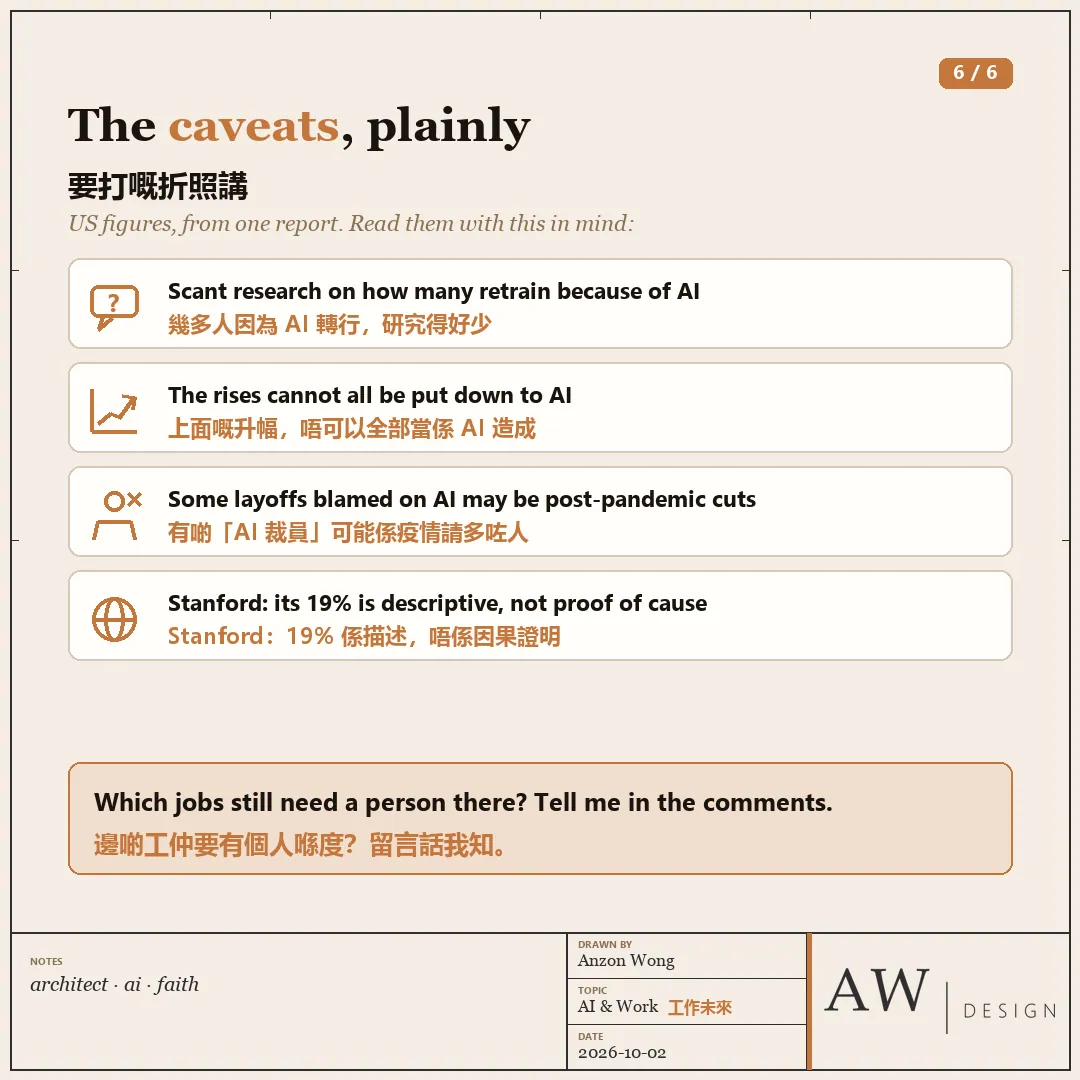
・The report itself says there is scant research on how many people are retraining because of AI. The rises above cannot all be put down to AI.
・Some economists think many layoffs blamed on AI are really companies shrinking after over-hiring in the pandemic.
・Stanford describes its 19% as a descriptive indicator, not proof of cause, and finds no widespread, economy-wide job displacement.
Hechinger Report: https://hechingerreport.org/ai-fear-young-workers-hands-on-jobs/
The Washington Post: https://www.washingtonpost.com/education/2026/09/30/fearing-ai-workers-go-back-school-seeking-jobs-that-still-need-human-touch/
Which jobs do you think still need a person there? Tell me what you think in the comments 👇
More in AI news
All → Roughly one in four American workers now worries that technology will make their job…
 OpenAI wants every one of your AI agents to have its own computer. Mine already do
 Give an AI agent a wallet, and the question is not whether it can use it
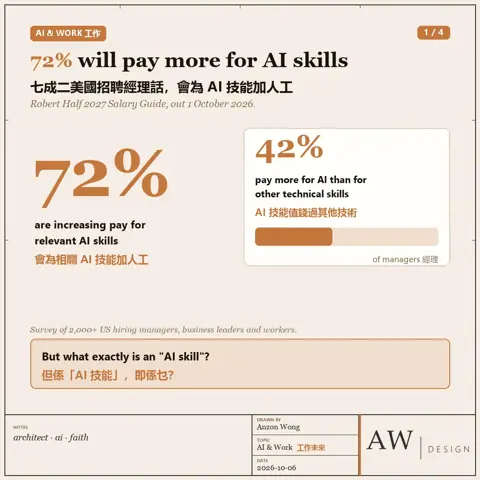 72% of US hiring managers say they will pay more for AI skills