Everyone is watching the humanoids and guessing when one walks into the house
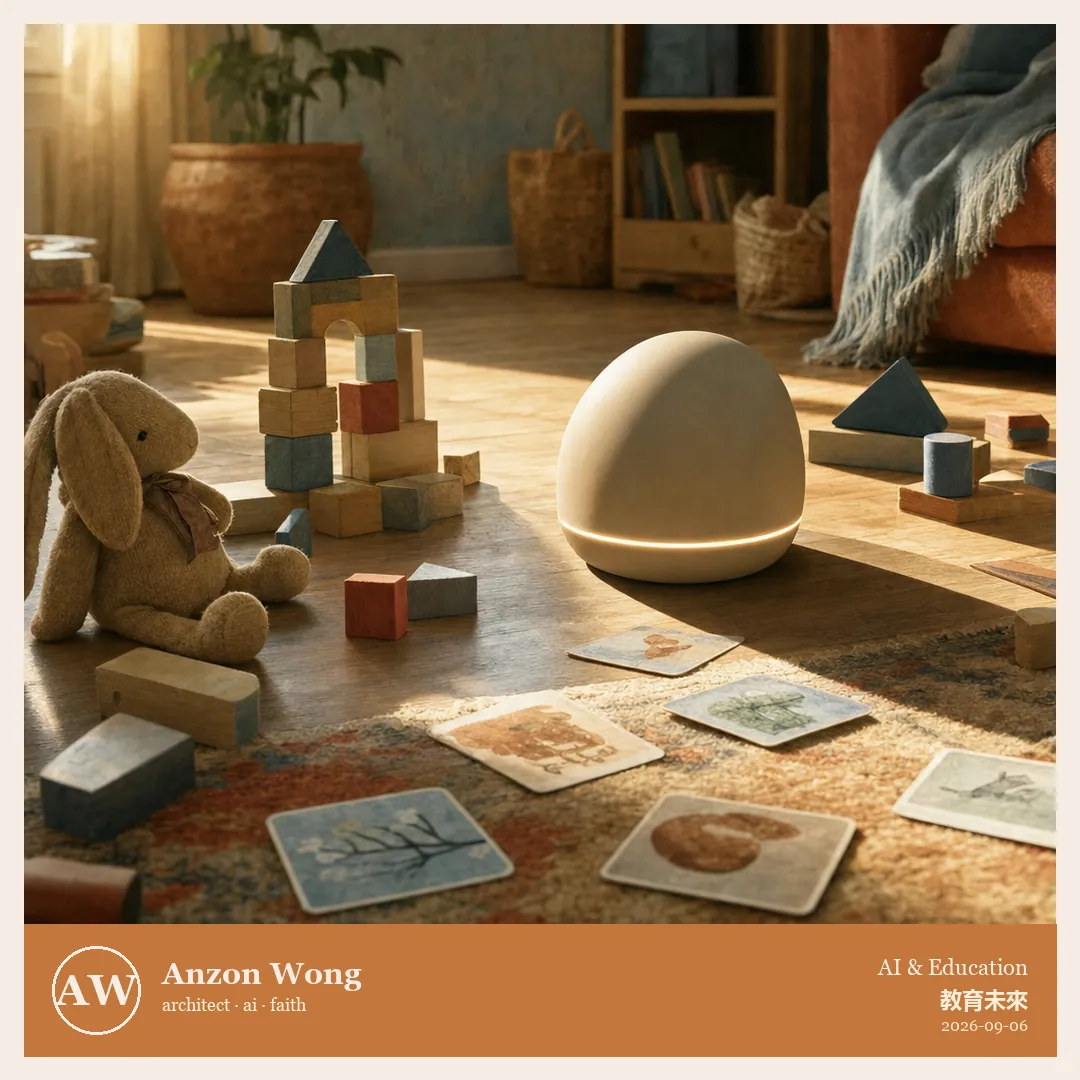
On 4 September at IFA in Berlin, the one that actually gets in showed up. No human shape, no legs: TCL's hey AiMe, billed as the world's first "family companion-education robot". For children from age three, ten degrees of freedom, more than twenty sensors, navigating a home on its own, teaching through guided play.
The detail worth noticing isn't how clever it is, it's the chip inside. The same Sunrise line is already in mass production in a household robot dog that has reached thousands of homes. Which means this category has stopped being a one-off demo. There's a supply chain behind it, and these things are starting to ship the way televisions ship.
What made me stop, though, was the positioning. Humanoid robots sell help, folding, washing, lifting. This one sells company and teaching. And it sells them to a three-year-old.
Three. The years in which a person learns how to be with someone, how it feels to be understood, how to wait for another human to respond.
I'm not saying this is bad. A voice in the house that never runs out of patience with a child asking "why" for the hundredth time is, honestly, appealing, especially at half six, dinner not cooked, adult on half battery. I understand the pull completely.
The years in which a person learns how to be with someone, how it feels to be understood, how to wait for another human to respond.
But teaching and company aren't the same thing. A machine that helps a three-year-old learn colours and counting is ordinary, and genuinely useful. "Company" is a bigger word: it means the thing becomes a relationship in a child's day. And children ask something simple and strict of a relationship, remember me, sometimes fail me, sometimes be tired. Those imperfections are exactly where they learn what people are.
📌 On the news itself: "world's first" is the maker's own claim, and the fullest write-up came from the company that sells the chip, the man selling shovels talking about the gold. No price and no release date have been announced. Right now it's an exhibit, not a product.
I'm not rushing to be against it. I'd rather ask the practical question: if one of these does end up in the house, what relationship do I want my child to have with it? A tool, or a "someone"? That answer isn't set by the machine. It's demonstrated by the adults.
Would you put one of these in front of a three-year-old?