59% of construction executives say their technology is extensively or fully integrated
59% of construction executives say their technology is extensively or fully integrated. 30% meet the bar for a highly mature technology organisation. The gap between those two numbers is where AI tools get stuck.
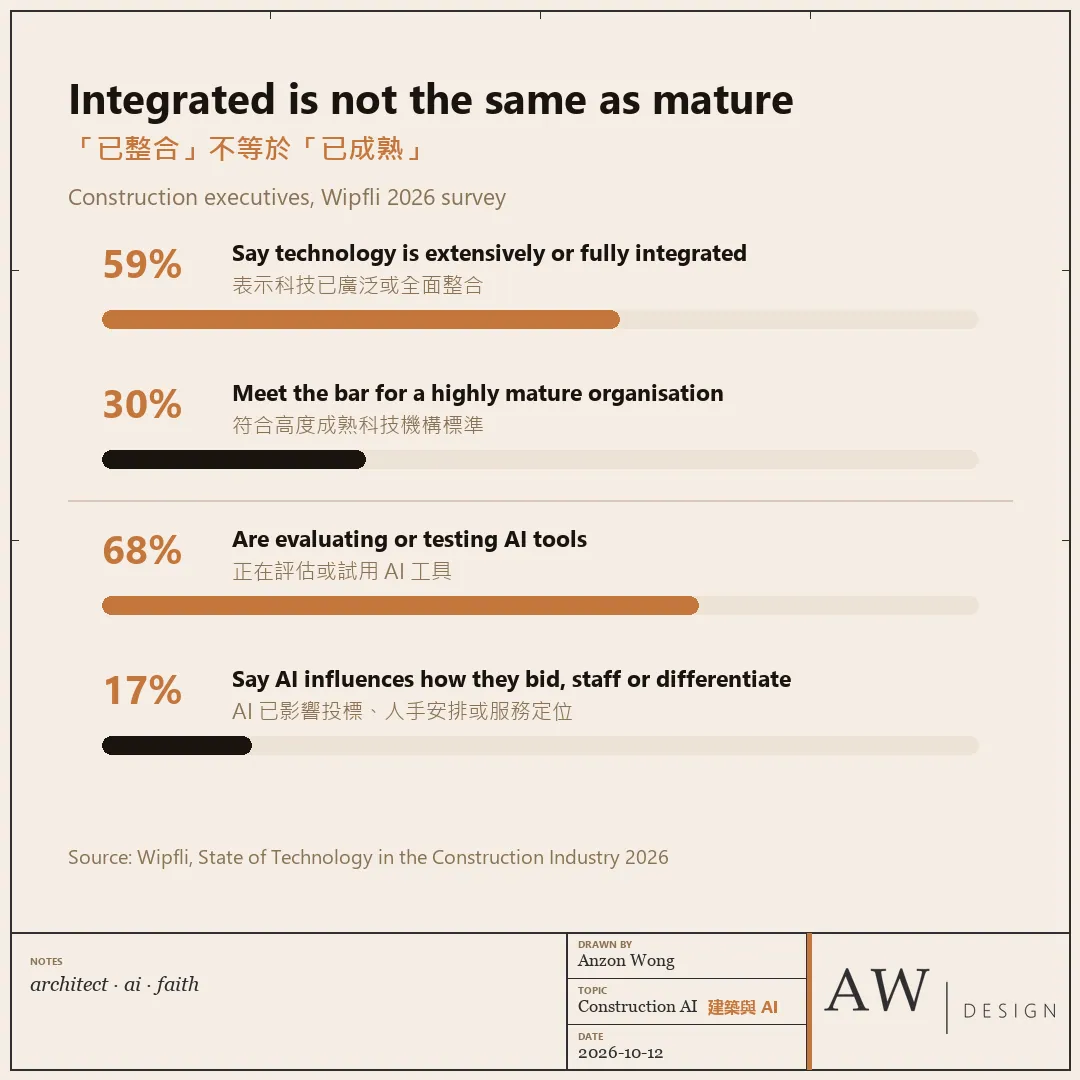
The figures come from Wipfli's 2026 State of Technology in the Construction Industry survey, summarised by its construction lead on 9 October. Maturity there is judged on governance, integration, analytics and decision-making, not on how many tools are installed.
The AI figures have the same shape. 68% are evaluating or testing AI tools. 17% say AI now influences how they bid, staff work or differentiate their services. About one in three have governance or measurement in place.
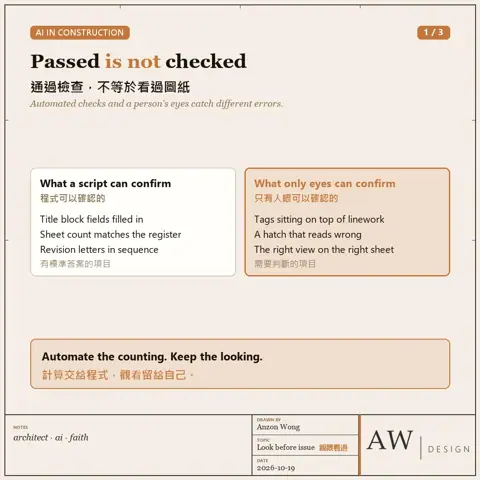
An AI tool reads exactly the records it is given. If a drawing register, a change log or a compliance note has a gap, the tool does not fill it. It repeats the gap, faster and with more confidence.
In England, the Building Safety Act regime already sets a test for records on higher-risk buildings. Regulation 31 of the Building (Higher-Risk Buildings Procedures) (England) Regulations 2023, the golden thread, requires the client to ensure the information is:
- Kept in an electronic format.
- Accurate and up to date.
- Available in a readable format, intelligible to its intended readers.
- Complete with previous versions of any document that has been updated.
In England, the Building Safety Act regime already sets a test for records on higher-risk buildings.
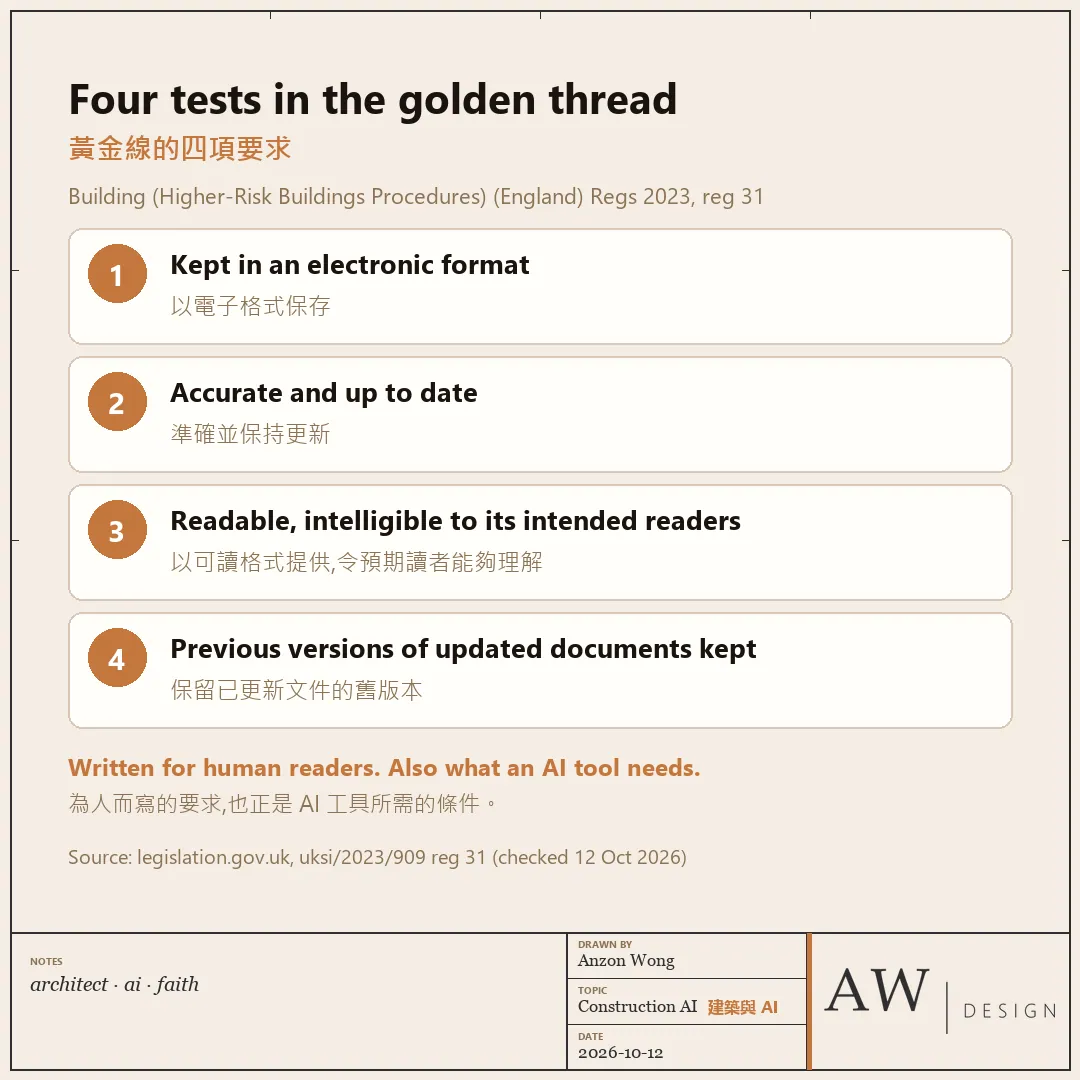
The regulation has human readers in mind. Read as a checklist, it also describes what an AI tool needs. A project whose golden thread meets those four tests is one an AI tool can read. A project that misses them has a compliance problem before it has an AI problem.
So the first question about AI on a project is not which tool. It is whether the record would hold up for a reader who takes every line literally.
Which of the four would your project records find hardest?